
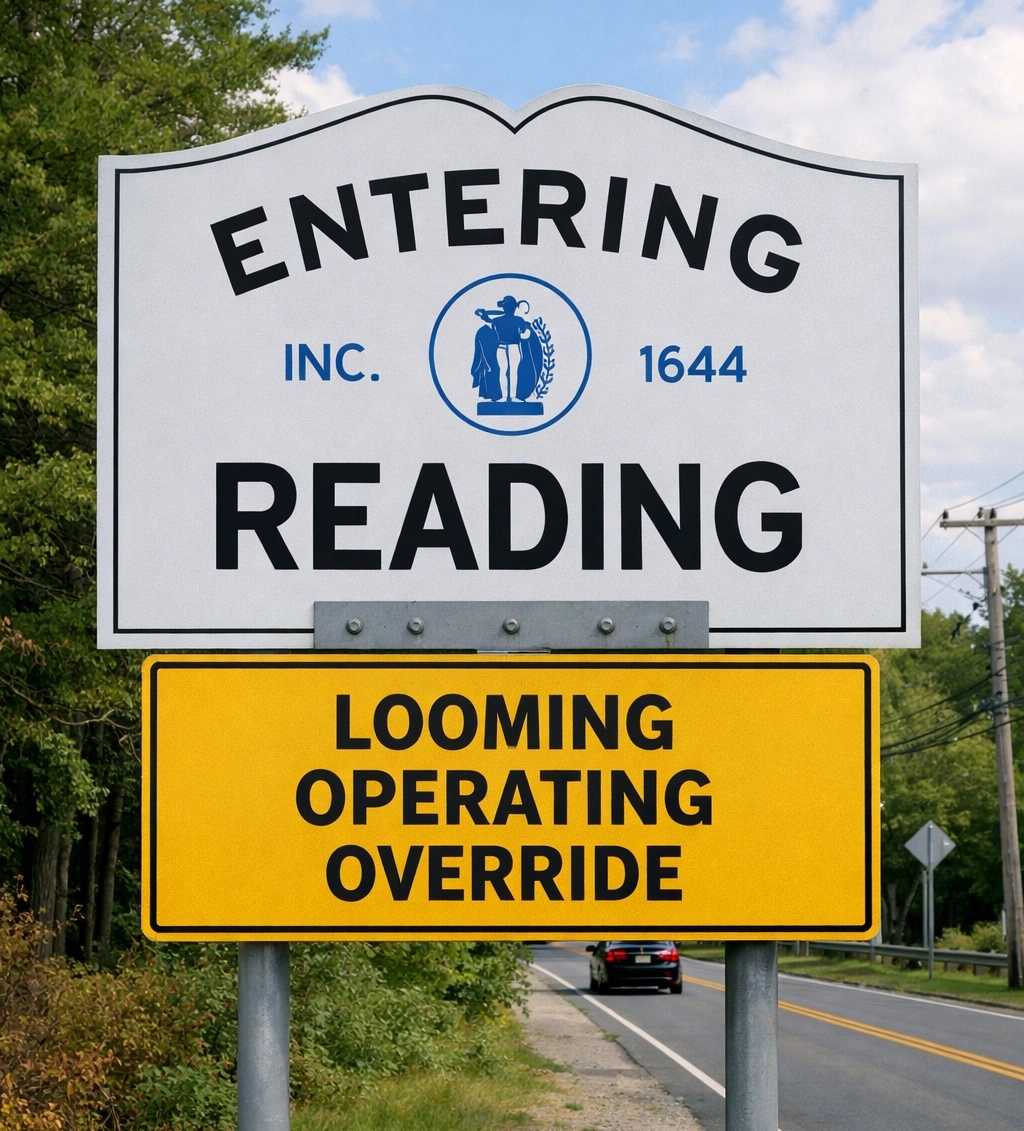
Addressing the Looming Operating Override – Protecting Taxpayers as Free Cash Reserves Decline
As of January 2026, Reading’s strong financial position is at a turning point. The town has relied heavily on certified free cash (our “rainy day” reserves) to balance operating budgets in recent years — using approximately $6 million in FY26 alone. Since 2022, the typical annual regeneration has been around $5–6 million from favorable variances and surpluses. However, the town’s analysis for FY26-FY30 projects annual regeneration to be only around $3 million in those years. With increased certified free cash usage each year and decreased regeneration, the net result in FY26-FY30 is projected to be drawing down free cash faster than free cash is added by regeneration. Accordingly, the town’s projections show free cash dropping from about $17.3 million at the end of FY25 to roughly $13.6 million by the end of FY26, and continuing to decline sharply (potentially to $9 million or lower by FY27) if current trends continue.
This depletion stems from rising accommodated costs (health insurance, energy, pensions, rubbish collection, special education out-of-district placements, and other unavoidable expenses) growing faster than the 2.5% + new growthallowed under Proposition 2½ — even as departmental operating budgets have been held relatively flat. Without action, the town will soon face a structural deficit in the operating budget (not related to the temporary debt exclusions for Killam School or the Reading Center for Active Living), forcing tough choices: deep service cuts or a permanent Proposition 2½ override to increase the tax levy baseline.
As your Select Board candidate, I will:
- Prioritize long-term fiscal sustainability — work with the Town Manager, Finance Committee, and department heads to aggressively identify efficiencies, control accommodated cost growth (e.g., through competitive bidding, energy conservation, and pension/OPEB liability management), and avoid unnecessary spending that accelerates free cash drawdown.
- Oppose premature or oversized overrides — any override request must be data-driven, transparent, and the last resort after exhausting cost controls, revenue enhancements (like maximizing state aid or grants), and structural reforms. I will push for clear multi-year projections and public education on exactly what services an override would protect and why.
- Restore free cash as a true reserve — not a routine budget plug. I’ll advocate for disciplined budgeting that aligns spending growth closer to sustainable revenue levels (aiming for 2.5–3% annual increases where possible) while protecting essential services like public safety, education, and senior programs.
- Ensure full transparency and resident input — demand regular, accessible updates on reserve trends, accommodated costs, and override scenarios so voters can make informed decisions without surprises.
Reading has built impressive reserves through careful management, but we can’t keep spending them down indefinitely. I’ll be the voice for prudent, proactive stewardship on the Select Board — delaying or minimizing any permanent tax increase while keeping our community strong and affordable.


